Can Date Palms Grow in Indonesia? The Facts on Local Dates, KL-1, and Market Reality
The complete, honest answer: date palms can grow and even fruit in Indonesia — with recorded harvests since 2004 and KL-1 orchards in Riau — so why are nearly all retail dates still imported? Here is the explanation.
The Short Answer
Yes, date palms can grow and under certain conditions fruit in Indonesia — but they cannot yet become a commercial supply source. The first recorded date harvest took place in 2004 at a pesantren in Surabaya, and the tropical KL-1 cultivar has fruited at around three years of age at the IDPA orchard in Pekanbaru, Riau. Volumes, however, are tiny, so practically all — over 99 percent — of the dates sold at Indonesian retail remain imported from the Middle East and North Africa. This article sums up the proof, the limits, and what it means for you as a buyer. Let us break it down one by one.
Proof That Dates Can Fruit on Indonesian Soil
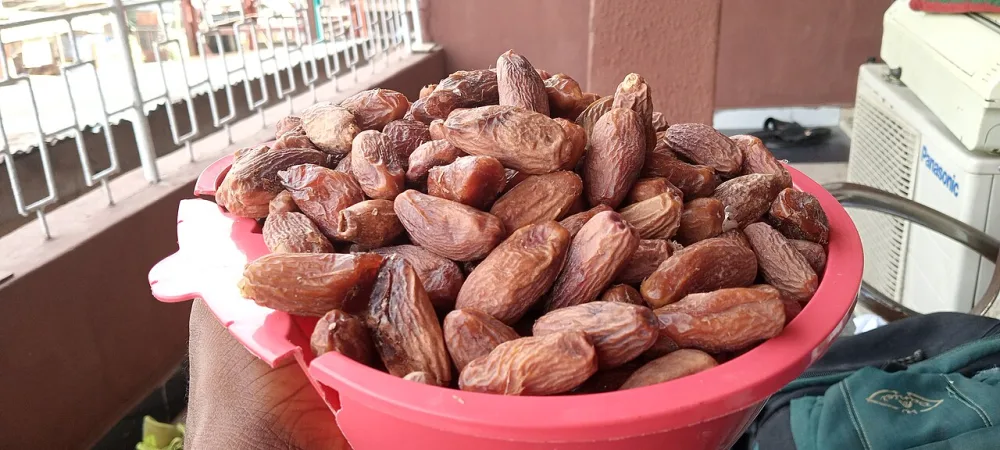
The story of locally grown Indonesian dates is no myth. Kompas and detik.com have documented its milestones: the 2004 first harvest at a Surabaya pesantren stands as Indonesia's first record of fruiting dates, and over the past decade the Indonesian Date Palm Association (IDPA) trial orchard in Pekanbaru, Riau brought the KL-1 cultivar to fruit only about three years after planting — a speed that drew national and regional media attention. Similar stories have emerged from yards and pioneer orchards across provinces.
What Is the KL-1 Date?
KL-1 is a selected cultivar from Thailand developed specifically for humid tropical climates, related to the Barhee and Deglet Noor variety lines. Compared with classic desert dates, KL-1 tolerates high rainfall better and can be harvested young at the khalal stage (crisp yellow fruit) — the form tropical date orchards commonly sell. This is the cultivar you most often see in 'Indonesian date orchard' news.
Why Is Commercial Cultivation Still Hard?
- The climate is too humid. Dates need long, dry heat to ripen fruit to the tamr stage; tropical rain triggers flower drop, fungus, and split fruit.
- Labor-intensive pollination. Date palms are dioecious — male and female trees are separate — so serious production demands skilled manual pollination.
- Quality is not yet comparable. Tropical date fruit is generally harvested at khalal and cannot yet match the flavor depth of desert tamr like Sukari or Ajwa.
- Economies of scale. With low yields and high maintenance costs, local dates struggle to compete with efficient imports — remember, Egypt alone ships over 24 thousand tons to Indonesia a year.
Khalal, Rutab, Tamr: Understanding Date Fruit Stages
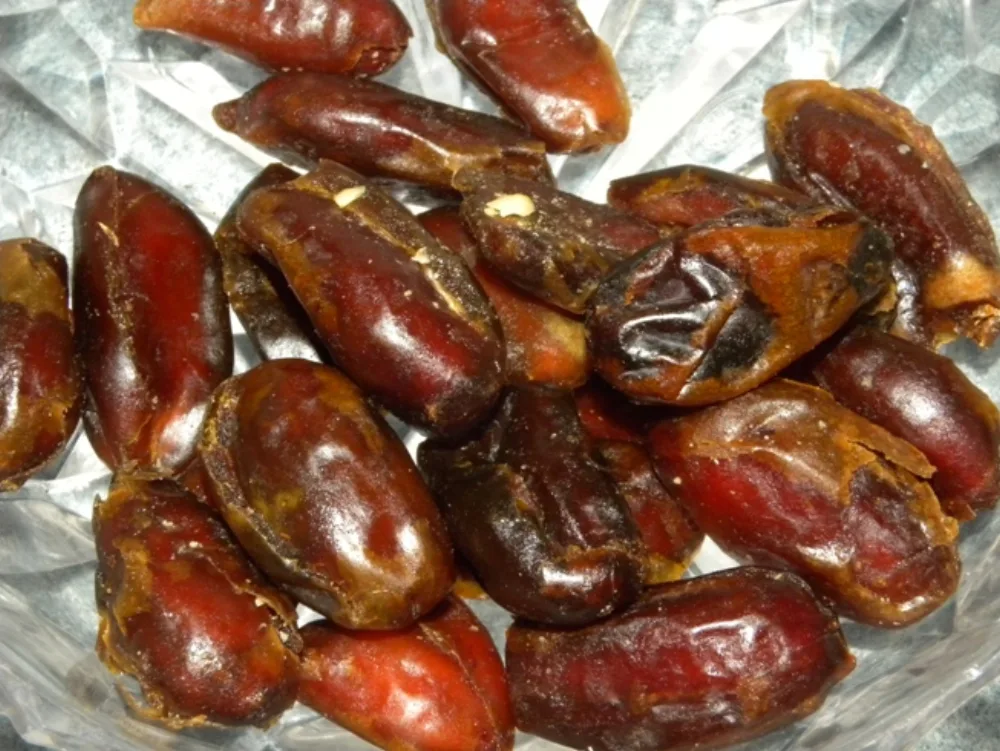
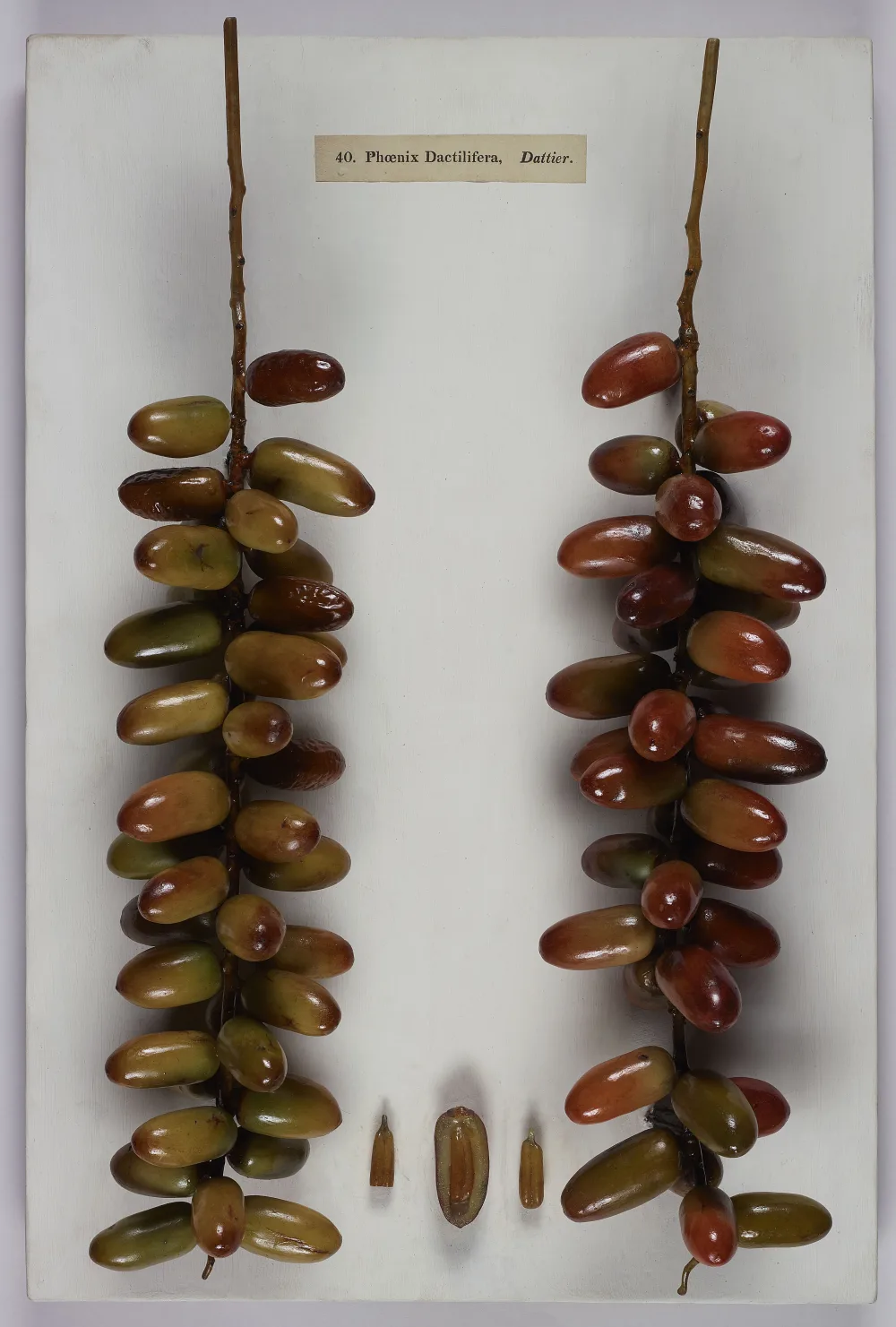
The most fundamental difference between tropical-orchard dates and imported dates lies in the harvest stage. Date fruit passes through four ripening stages: kimri (young green, not yet edible), khalal (yellow or red, apple-crisp with an astringent sweetness), rutab (half-ripe, soft and juicy, freshly sweet), and tamr (fully ripe, low moisture, densely sweet — the everyday form of dates we know). Indonesian tropical orchards can generally only harvest at khalal, because humid air spoils the fruit before it reaches tamr on the tree. In the desert, dry heat lets fruit dry naturally on the bunch — which is why imported Sukari, Ajwa, and Sayer arrive as perfect tamr without artificial drying. Understanding these stages keeps you from comparing apples to oranges when judging local dates.
A Timeline of Indonesian-Grown Dates
- 2004 — Indonesia's first recorded date harvest, at a pesantren in Surabaya
- 2010s — the tropical date seedling craze; the KL-1 cultivar from Thailand arrives and is planted across provinces
- ±3 years after planting — the IDPA orchard in Pekanbaru, Riau proves KL-1 fruits quickly in the humid tropics
- Today — date orchards serve as agritourism and nurseries; national retail supply remains almost entirely imported
So Where Do Local Dates Stand?
Today, Indonesian date orchards are best seen as agritourism pioneers and experimental horticulture: educational destinations, nurseries, and community pride — not competitors to retail supply. BPS import data frames the context: the national need of 54.45 thousand tons a year is met almost entirely by imports. If Indonesian tropical dates ever reach commercial scale, we will be the first to celebrate it on our data dashboard.
Can You Plant a Date Palm at Home?
Of course — and it is a delightful hobby. KL-1 or Barhee seedlings can grow in a yard with well-drained soil and full sun all day. What needs managing is expectation: a female tree needs a male partner or pollen to fruit, the fruit will most likely only reach the khalal stage, and the taste differs from the imported tamr you know. Treat it as a tree of pride, a yard shade, and a story for guests; for the family's eating needs, quality imported dates remain the answer. Tropical date-grower communities on social media also actively share pollination and care experiences — join one before buying seedlings, so your expectations form from real practice rather than a nursery's sales pitch.
What Does This Mean for You as a Buyer?
First, be wary of 'local date' claims at implausible prices — always ask the variety and origin. Second, understand that today's best eating quality still comes from the desert belt: Al Qassim Sukari, Madinah Ajwa and Anbara, Iranian Piarom and Sayer, Palestinian Medjool. Third, buy from sellers transparent about their import chain. At Lumbung Kurma Indonesia, every product lists its origin and grade, shipped from our Cakung, East Jakarta warehouse across Indonesia — same-day for Jakarta, Bekasi, Depok, Tangerang, and Bogor.
FAQ
Can date palms fruit in Indonesia?
Yes, but marginally. The first recorded harvest was in 2004 at a pesantren in Surabaya, and the KL-1 cultivar fruited at around three years old at the IDPA orchard in Pekanbaru, Riau. Volumes remain tiny, far from commercial supply.
What is the KL-1 date and how fast does it fruit?
KL-1 is a tropical cultivar selected in Thailand, related to the Barhee and Deglet Noor lines, developed for humid climates. At the IDPA orchard in Pekanbaru, KL-1 fruited about three years after planting.
Why are dates not mass-cultivated in Indonesia?
Four main reasons: the tropical climate is too humid for fruit ripening, manual pollination is labor-intensive, fruit quality does not yet match desert dates, and the economics lose to efficient imports.
So where do the dates sold in stores come from?
Over 99 percent are imported. BPS recorded 54.45 thousand tons of dates entering Indonesia in 2025, mainly from Egypt, Saudi Arabia, the UAE, Tunisia, Iran, and Palestine.
Are genuinely Indonesian-grown dates sold anywhere?
In very limited quantities, usually khalal fruit (crisp and yellow) from agritourism orchards, not ripe tamr like imported dates. If you encounter a local-date claim, ask the variety, orchard location, and fruit stage before buying.