How to Choose Quality Dates: A 10-Point Checklist for First-Time Buyers
More than “pick the smooth ones”. A 10-point physical inspection checklist, how to read packaging labels, and channel-specific checks for markets, marketplaces, and direct suppliers — distilled from our warehouse goods-receiving protocol.
Why Generic Advice Falls Short
Search for “how to choose dates” and you will find the same recycled tips: pick the smooth ones, avoid the overly dry ones. That advice is true, but it will not help you tell grade-A fruit from polished old stock, or natural sugar crystallization from mold. This guide condenses the protocol we run every time a date shipment is unloaded and sorted at our warehouse in Cakung, East Jakarta — turned into a checklist anyone can use at a market, a supermarket, or when shopping online.
Before Inspecting the Fruit: Learn the Three Words on the Label
You cannot judge date quality on looks alone, because every variety has its own “normal”. Get familiar with these three terms first:
- Variety — the genetic type of the fruit: Sukari, Ajwa, Medjool, Deglet Noor, Sayer, and so on. Variety determines flavor, texture, and the fair price range.
- Grade — the result of sorting by size and condition: A, AA, Jumbo, up to VIP. Higher grades mean larger, more uniform fruit with fewer defects.
- Moisture class — wet dates (like rutab-stage Sukari), semi-dry (Sayer, Deglet Noor), and dry. A firm semi-dry date is normal, not “stale”.
We cover this naming system fully in our separate guide on date brands, varieties, and grades — in short: a date's value is set by its variety and grade, not its logo.
The 10-Point Physical Inspection Checklist
| Checkpoint | What you want | Red flag |
|---|---|---|
| Skin | Intact, hugging the flesh | Large tears, massive peeling |
| Shine | Soft natural sheen | Wet gloss as if coated in syrup |
| Color | Even, typical of the variety | Odd dark patches, scorching |
| Wrinkles | Fine, normal wrinkling | Deep, rock-hard shriveling (except dry varieties) |
| Aroma | Sweet, caramel- or honey-like | Sour, alcoholic, musty |
| Press test | Springy, slowly rebounds | Mushy and watery, or crumbling |
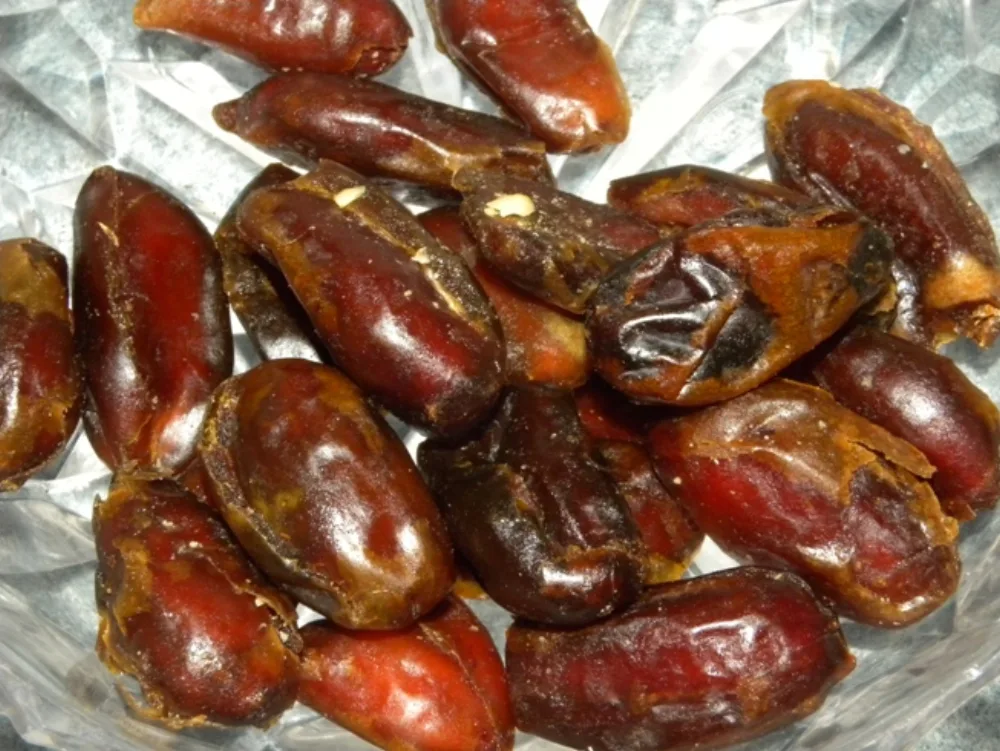
| White crystals | Dry sugar grains under the skin (safe) | Cotton-like fuzz on the surface (mold) |
| Insect signs | None | Pinholes, powder, fine webbing between fruits |
| Uniformity | Fruits of similar size | Extreme size mixing in a “premium” grade |
| Inside | Thick flesh, clean pit cavity | Dusty cavity or larvae |
Shine: Natural or Glucose-Dipped?
Wet varieties such as Mazafati or rutab-stage Sukari are naturally glossy. What deserves suspicion is a uniform wet gloss that leaves a syrupy film on your fingers. Indonesian outlets Kompas.com and ANTARA both advise avoiding dates coated with added sweeteners — the sweetness tastes “sharp” rather than fruity, and such fruit attracts ants far faster.
White Crystals: Sugaring or Mold?
This is where buyers most often reject good dates — or accept spoiled ones. Sugar crystallization (sugaring) happens in long-stored dates: the grains are dry like fine sand, sit under or inside the flesh, and the aroma stays sweet. Mold looks different: cotton-like filaments on the skin, often near the stem end, with a musty or sour smell. Sugaring is safe to eat even if it signals older stock; mold means reject that pack.
Fermentation Smell
High-moisture dates left too long in tropical heat can begin to ferment. The tell: a sour, vinegar-like or tape-like aroma and a faint “fizzy” sensation on the tongue. With branch dates and loose dates, smell the middle of the pile, not just the top layer.
Reading the Pack and Label
- Ingredients: ideally a single ingredient — dates. Watch for glucose syrup or preservatives in processed products.
- Country of origin: good sellers state it; cross-check it against the variety (Sukari from Saudi Arabia, Deglet Noor from Tunisia or Algeria, and so on).
- Packing and expiry dates: a trustworthy repacker prints both, not just a price sticker.
- Variety and grade named: a pack that only says “premium dates” with no variety is a big question mark.
- Net weight: for branch dates, ask whether the weight includes the branch.
Extra Checks per Shopping Channel
At a Market or Physical Store
Use the biggest advantage of buying in person: ask to taste one fruit. Check the bottom layer of the display box — every trader puts the best fruit on top — and avoid stalls that leave their dates under direct sun all day.
On Marketplaces
Read reviews with real customer photos, sort by newest, and make sure the listing names the variety plus grade. When the parcel arrives, run the 10-point checklist before the complaint window closes. A flawless catalog photo with no real stock photos anywhere is your cue to ask questions in chat first.
From a Direct Supplier
Ask for real-time stock photos or videos (not catalog images), ask when the container arrived, and start small — for example a 500 g pack of Sukari Al-Qassim Grade A dates — before committing to cartons. A healthy supplier never minds being tested with a small order.
The Five Most Common First-Timer Mistakes
- Judging every variety by one standard. Semi-dry dates get dismissed as “stale” for being firm, wet dates as “too mushy” — when both are simply showing their normal character. Learn the moisture class before passing judgment.
- Falling for “premium” with no variety or grade. Adjectives cannot be compared; variety names can. A pack that hides the variety usually hides something else too.
- Buying in bulk on the first try. Date preferences are deeply personal; test 500 g before committing to a carton, however tempting the offer.
- Ignoring the packing date because “dates keep anyway”. Long-keeping is not forever — texture and aroma still decline with age, especially in wet varieties.
- Choosing well, then storing badly. Wet dates left open in a tropical kitchen for weeks will ferment; an airtight container in a cool spot is the mandatory sequel to this checklist.
What Comes Next
This checklist answers “is the date in front of me worth buying”. The question before that — which variety suits your needs — is covered in our Best Dates in Indonesia guide comparing ten varieties by use case, from daily eating to gift hampers. And if you want to know when the freshest stock lands in Indonesia, see our date season calendar: when you buy turns out to matter as much as how you choose.
FAQ
Does a very shiny date always mean added sweetener?
Not always. Wet varieties such as Mazafati and rutab-stage Sukari are naturally glossy. Suspect added sweetener when the gloss is uniformly wet, leaves a syrupy film on your fingers, and the sweetness tastes sharp rather than fruity.
What are the white crystals or powder on dates?
Two possibilities. Natural sugar crystallization (sugaring) appears as dry, sand-like grains under the skin with a still-sweet aroma — safe to eat though it signals older stock. Mold appears as cotton-like fuzz on the surface with a musty smell — do not eat those.
Does a firm date mean poor quality?
Not necessarily. Semi-dry varieties such as Sayer, Zahedi, and Deglet Noor are naturally firmer and actually ship and keep better. The real warning signs are a wet-class variety that has hardened solid, or any firm date with a musty smell.
Is buying loose dates by the kilo a good idea?
Yes, and it is often cheaper for family consumption. Make sure the stall is clean, stock turns over fast, the dates are not displayed under direct sun, and run the physical checklist — especially aroma and insect signs — before weighing.