Tunisian Dates (Deglet Noor): The “Date of Light”, Its Price, and Its Role in the Indonesian Market
The branch dates that fill Indonesian supermarkets before Ramadan are Deglet Noor — the “date of light” from Tunisian and Algerian oases. The full profile: a honey-like, restrained sweetness, BPS import data, price ranges, and how it compares with Sukari and Sayer.
The Branch Date Everyone Knows but Few Can Name
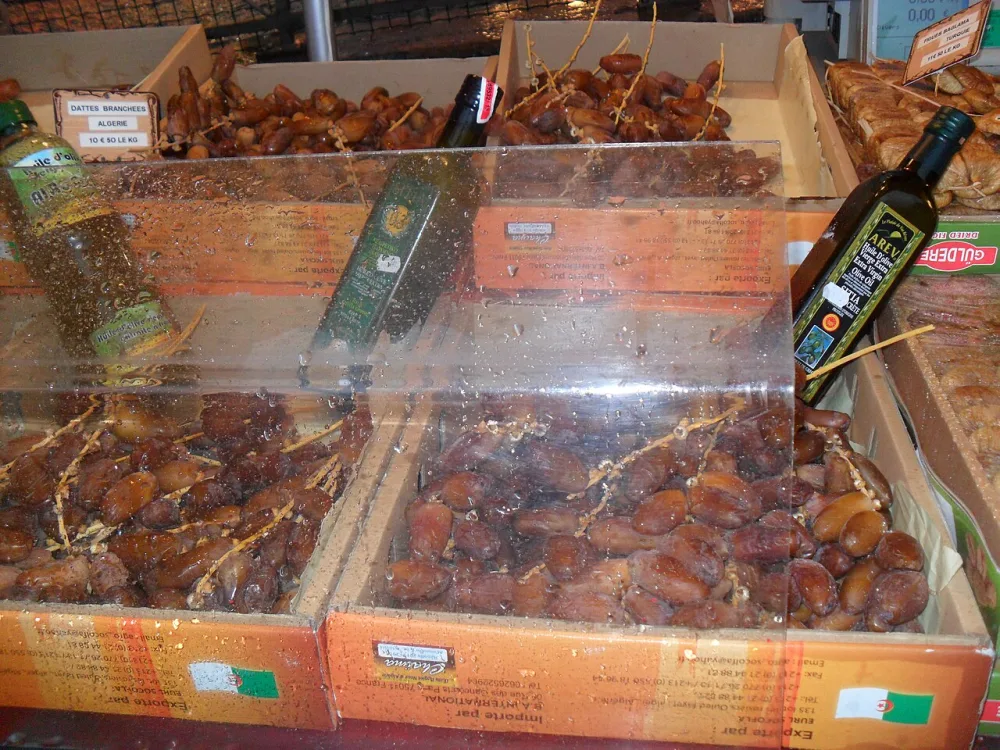
Nearly every Indonesian has seen it: golden-yellow dates sold still attached to their strands, lining supermarket shelves before Ramadan. Most people just call them “branch dates” or “Tunisian dates”. The variety's real name is Deglet Noor (often spelled Deglet Nour) — Arabic for, roughly, the “date of light”, after its semi-translucent flesh that seems to glow when held against the light. This encyclopedia entry covers its full profile: origins, flavor character, its import path into Indonesia, price ranges, and who this date suits best.
Origins: Saharan Oases of Tunisia and Algeria
Deglet Noor is North Africa's flagship variety. Tunisia grows it at scale in southern oasis regions such as Tozeur and Kebili; industry sources quoted by FreshPlaza put about 80 percent of Tunisia's date production in Deglet Noor, with exports in the range of 115 thousand tonnes a season — making Tunisia the world's largest Deglet Noor exporter. Neighboring Algeria grows the same variety around Biskra and treats it as a point of national pride.
Both origins are visibly present in our market. BPS 2025 data compiled by GoodStats and Periskop ranks Tunisia as Indonesia's fourth-largest date supplier (3,292 tonnes) and Algeria fifth (2,771 tonnes) — together over 6 thousand tonnes a year, almost entirely as Deglet Noor. For the full context of these numbers, including Egypt and Saudi Arabia at the top, see our Indonesian Date Import Data report.
Flavor and Texture: Honey with Restraint
Deglet Noor belongs to the semi-dry class. Its organoleptic signature:
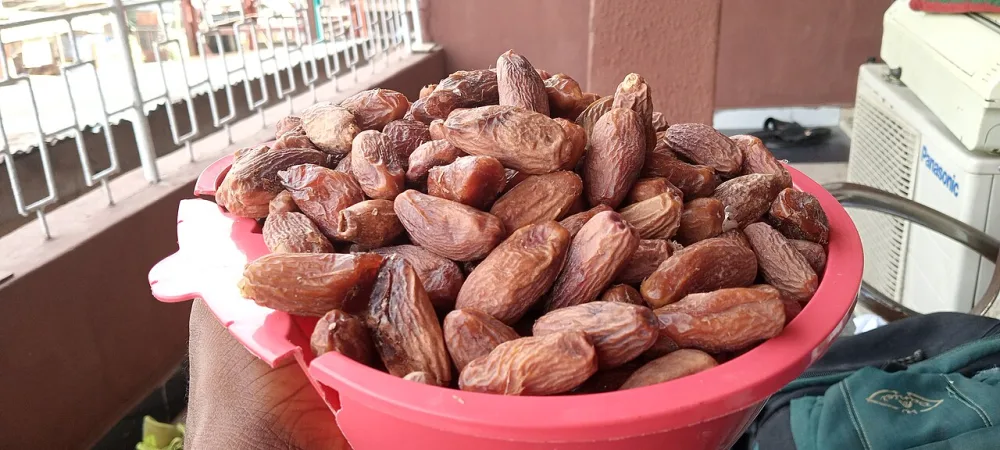
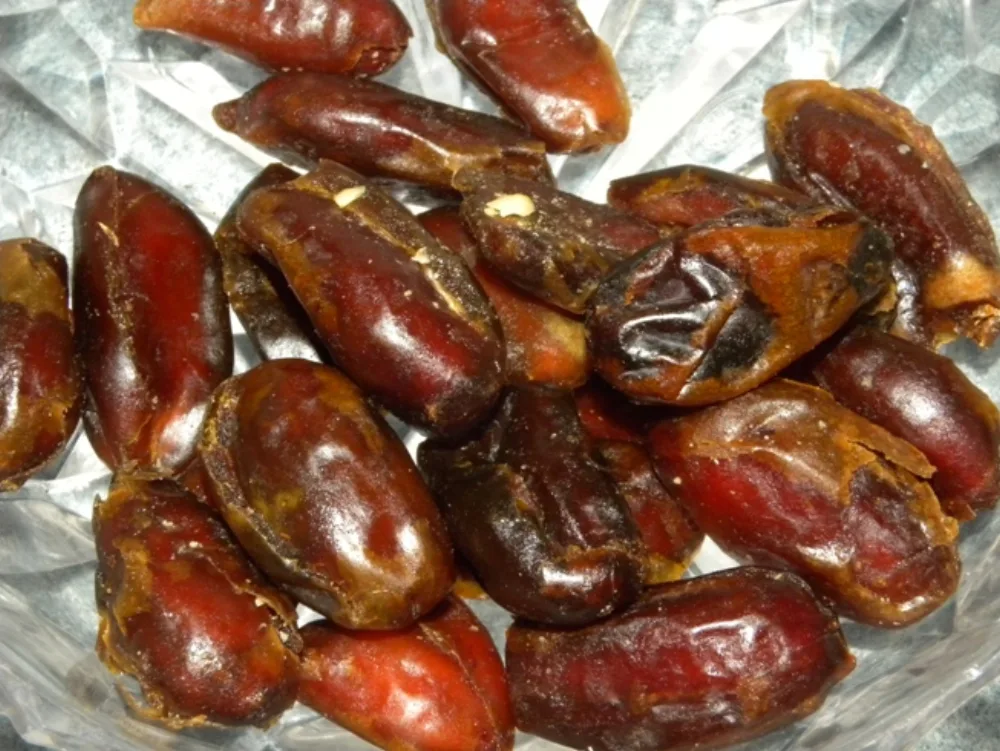
- Color: honey-yellow to golden brown, with a smooth, slightly glossy skin.
- Flesh: semi-translucent — the source of the “date of light” nickname; springy outside, tender inside.
- Flavor: medium sweetness with honey and light caramel notes; never cloying.
- Bite: drier and firmer than Sukari; ideal for those who dislike very moist dates.
That “sweetness with restraint” is why Deglet Noor is often the first date that wins over people who claim not to like dates. In the kitchen it is also a baking and granola staple, holding its shape when chopped.
Tunisian Date Prices in Indonesia
Compared with Madinah varieties, Deglet Noor is budget-friendly. AcehGround's market roundup for the 2026 season places Tunisian dates at roughly Rp70,000–85,000 per kilogram; on marketplaces, 500 g branch packs typically sell for Rp40,000–60,000 depending on brand and season. For comparison, tempo.co's price survey anchors Sukari at about Rp90,000 per kg and premium Ajwa at Rp200,000–350,000 per kg. Three things move Deglet Noor prices: season (rising before Ramadan), on-branch or loose (the branch adds beauty and weight), and fruit-size grade.
Quick Comparison: Deglet Noor vs Sukari vs Sayer
| Aspect | Deglet Noor (Tunisia/Algeria) | Sukari (Saudi Arabia) | Sayer (Iran) |
|---|---|---|---|
| Moisture class | Semi-dry | Wet–soft | Semi-dry |
| Flavor | Honey, medium sweet | Caramel, melting sweet | Deep, dark sweetness |
| Price range per kg | Rp70–85 thousand | ± Rp90 thousand | More economical, the bulk workhorse |
| Keeping and shipping | Good — safe for outer islands | Needs gentler handling | Excellent |
| Best for | Guest platters, baking, first-timers | Daily eating, iftar | Catering, processing, budget stock |
Each fills a different role. If you want an even more economical semi-dry date for large needs, the carton-pack Iranian Sayer in our catalog is its closest counterpart; if softness is the priority, Sukari Al-Qassim Grade A remains the champion.
Why Is Deglet Noor Always Sold on the Branch?
Most dates are sold loose, but Tunisian Deglet Noor is traditionally harvested and exported on its strands. The reason is practical as much as aesthetic: fruit left on the branch bruises less in transit, dries out more slowly, and looks beautiful served as-is — which is why branch dates star on Lebaran guest tables and in gift parcels. When buying, inspect the strand base: fruit still gripping the branch indicates well-handled stock, while lots of fallen fruit at the bottom of the pack means the dates have begun to dry.
Buying and Storage Tips
- Check the give: good Deglet Noor is springy, never rock-hard. Excessive hardness means old stock or poor storage.
- Read the origin label: Tunisia and Algeria are both legitimate; what matters is that origin and packing date are clearly printed, per the checklist in our guide on choosing quality dates.
- Store airtight: the semi-dry class keeps for weeks at cool room temperature; an airtight container stops it absorbing kitchen smells.
- For outer islands: its keeping quality makes Deglet Noor and Sayer the safest picks for long-haul delivery — details in our nationwide date shipping guide.
Deglet Noor in the Kitchen: More Than a Guest Platter
Its semi-dry character makes Deglet Noor the most versatile variety in an Indonesian kitchen. Diced, it neither sticks to the knife nor collapses — perfect for granola, energy balls, and salad toppings. Halved and filled with peanut butter or cream cheese, it becomes an expensive-looking treat on a light budget. For Lebaran cookies, its mash can replace part of the sugar in nastar dough or date cake batter. One trick from our test kitchen: if your stock starts drying out, steam the fruit for two to three minutes — the flesh turns supple again without losing its honey notes. And when a recipe calls for deeper caramel with a stickier bite, the Iranian Piarom in our catalog — the “chocolate date” — is its nearest flavor neighbor in a more premium class.
The Right Date to Start Your Date Journey
Deglet Noor proves a great date need not be the sweetest or the priciest. With its polite honey flavor, friendly price, and strong shelf life, Tunisia's “date of light” is the ideal gateway into the world of dates — before you venture deeper into Sukari, the Madinah varieties, or Palestinian Medjool on our variety map.
FAQ
How do Tunisian dates differ from Madinah dates?
Tunisian dates (Deglet Noor) are a semi-dry variety with a honey-like, medium sweetness and prices around Rp70–85 thousand per kg. Madinah varieties like Ajwa and Safawi are generally softer, darker, carry religious-historical significance, and cost far more — Ajwa can reach Rp200–350 thousand per kg.
Why are Tunisian dates sold on the branch?
Deglet Noor harvesting tradition keeps the strands because attached fruit bruises less in transit, dries more slowly, and looks beautiful when served. Lots of fallen fruit at the bottom of a pack signals stock that has started to dry out.
Is Deglet Noor very sweet?
Quite the opposite — Deglet Noor is known for medium, honey-toned sweetness that never cloys. That character often makes it the first favorite of people who usually avoid dates for being too sweet.
How much Tunisian date volume does Indonesia import?
BPS 2025 data compiled by GoodStats records Tunisia supplying 3,292 tonnes and Algeria — growing the same Deglet Noor — 2,771 tonnes, ranking them fourth and fifth among Indonesia's largest date suppliers.