Dates for Babies and Kids: Safe Ages, Stage-by-Stage Serving, and the Softest Varieties
From what age can babies eat dates, and how should they be served safely? A conservative parents' guide: an age-by-age serving table, portion limits, the choking risk of whole dates, and the easiest varieties to mash — referencing KlikDokter, Alodokter, and Solid Starts.
The Question Every Parenting Group Asks
“Can my 8-month-old eat dates?” The question keeps surfacing in Indonesian parenting forums, and the answers are all over the place: some say from the first day of solids, others say wait until toddlerhood. As a national reference desk for dates, we have condensed a conservative, balanced guide — drawing on Indonesian health platforms KlikDokter and Alodokter and the international infant-feeding resource Solid Starts — so the decision at your family table does not rest on hearsay.
From What Age Can Babies Eat Dates?
In general, dates may be introduced once a baby starts complementary feeding at around 6 months — but only with the texture fully modified: a smooth puree, or mashed into porridge. KlikDokter notes that because dates are sticky and fairly firm, some practitioners suggest waiting until about 8 months; a sensible approach if your baby is still adapting to textures. One non-negotiable rule from Solid Starts: whole dates or large pieces are a serious choking hazard for babies and toddlers — the flesh is chewy and sticky, and the pit is hard. Always remove the pit, and always modify the texture.
A reassuring note for new parents: unlike honey, which is forbidden under age one due to botulism risk, dates carry no such prohibition. The challenge with dates is not what they contain, but their texture and sugar.
Age-by-Age Serving Table
| Age | How to serve | Safety notes |
|---|---|---|
| 6–9 months | Smooth puree, blended with breast milk, porridge, or banana | Pit removed; strain if needed; start with 1–2 spoonfuls |
| 9–12 months | Very finely minced, dissolved into soft porridge | Still no chunks; watch digestion |
| 1–3 years | Small lengthwise pieces about pea-width | Always supervised; keep whole dates out of reach |
| 4 years and up | Whole pitted dates, one at a time | Teach thorough chewing; supervision still applies |
The table follows the same choking-prevention principles used for grapes and other chewy fruit. Every child develops differently — when in doubt, ask your pediatrician.
The Real Nutritional Case — Without Overselling
Per 100 grams (about 4–5 fruits), USDA data puts dates at roughly 277–282 kcal, 7–8 g of fiber, and about 696 mg of potassium, plus magnesium and other minerals. For children, that translates into three realistic benefits:
- Dense energy in small portions — useful for small appetites and very active kids.
- Fiber for digestion — date puree is a common home remedy attempt for constipation, as noted by Haibunda and KlikDokter.
- A natural sweetener replacing table sugar — mashed dates can sweeten porridge, bakes, and smoothies, so children learn a sweetness that arrives together with fiber.
What needs straightening out: dates are not a “superfood” that replaces other food groups, and claims like boosting intelligence are marketing enthusiasm, not scientific conclusions. Natural date sugar is still sugar — excessive sweetness early in life shapes taste preferences that are hard to undo.
How Much Is Reasonable?
There is no official date-specific quota, so use fruit-snack portion logic: for babies, start with 1–2 spoonfuls of puree and observe the stool; for toddlers, around half to one medium date a day is already meaningful; preschoolers are generally fine with 1–2 dates. Because dates are sticky, they cling to teeth — make water after eating and twice-daily brushing the habit, since sugar that lingers is cavity's best friend.
Which Varieties Work Best for Kids?
Not all dates mash equally well. From our own catalog, these three are the usual parents' picks:
- Sukari — caramel-soft flesh that mashes with a fork; the 500 g pack of Sukari Al-Qassim Grade A is a practical starting point for an MPASI kitchen.
- Medjool — large, thick-fleshed fruit where one date makes one puree portion; Jumbo Palestinian Medjool brings the deep caramel flavor kids love.
- Ajwa — soft with restrained sweetness; the pick for families who prefer a calmer flavor.
Semi-dry varieties such as Sayer or Zahedi, by contrast, suit adults and baking — too chewy for baby gums. Whichever you choose, apply the habits from our guide on choosing quality dates: intact skin, fresh sweet aroma, no insect signs — standards that matter even more when the fruit is for a baby.
Three Quick Serving Ideas
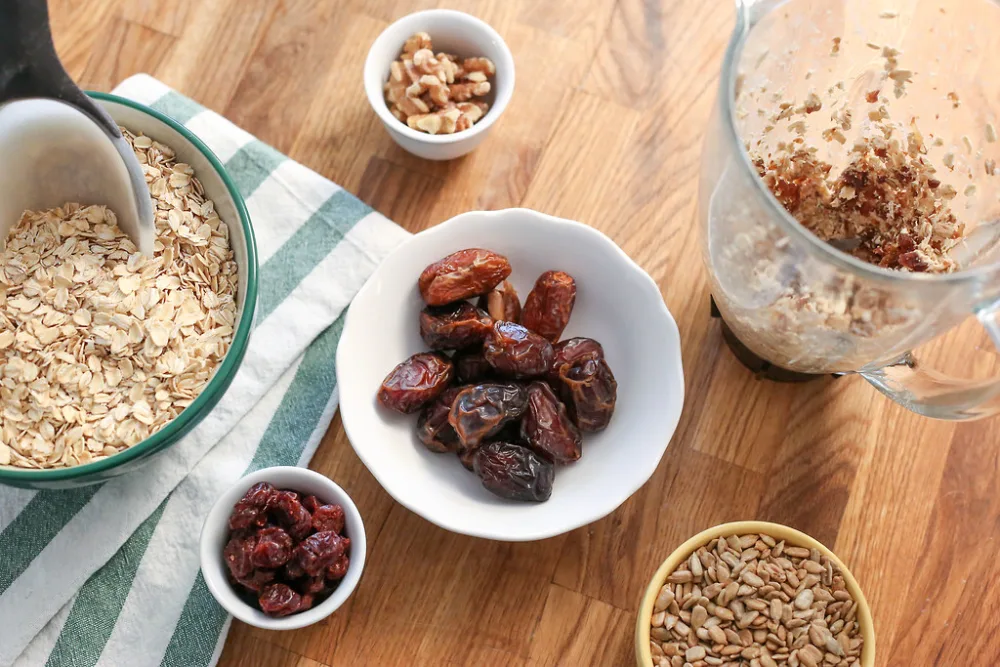
- Date-banana puree (6 months up): soak 2 pitted dates in warm water for 15 minutes, blend with half a banana and breast milk or water as needed.
- Date oat porridge (9 months up): cook oats with 1 very finely minced date until dissolved — no added sugar.
- Date milk smoothie (1 year up): blend 1 date with milk and a little frozen banana — the fruit is all the sweetener it needs.
Hygiene and Storage for the MPASI Kitchen
Dates are a dried fruit that passes through many hands — orchard, packing facility, store — so treat them like any other weaning ingredient. Rinse the fruit under running water before soaking; a 10–15 minute warm-water soak also softens the flesh for easy blending. Date puree is best finished within 24 hours when refrigerated, or frozen in ice-cube trays for up to about a month of stock — thaw one cube per cooking session. And what about those convenient bottles of sari kurma (date syrup)? They are acceptable for older children, with two caveats: the fiber is far reduced compared with whole-fruit puree, and instant products can contain added sugar — always read the ingredient list. We compare both forms fully in our date syrup vs whole dates article.
When to Talk to a Doctor
Contact your pediatrician if a rash, vomiting, or diarrhea follows the introduction of dates; if your child has a medical condition such as a metabolic disorder or excess weight; or if you are unsure which texture is safe for their stage. This article is general education and does not replace personal medical advice.
FAQ
Can a 6-month-old baby eat dates?
Yes, as a smooth pitted puree blended with breast milk or porridge, starting with 1–2 spoonfuls. Because of the sticky texture, some practitioners suggest waiting until around 8 months. Whole dates or large pieces must never be given due to choking risk.
How many dates per day for a toddler?
Around half to one medium date a day for toddlers, and 1–2 for preschoolers, cut into small lengthwise pieces and always supervised. Follow with water and regular tooth brushing, as dates cling to teeth.
Can dates replace sugar in baby food?
Yes — one of their best uses: mashed dates deliver sweetness together with fiber and minerals. Still limit the amount; natural sugar is still sugar, and complementary feeding is about introducing varied flavors, not just sweetness.
Which date variety is best for babies?
Soft-fleshed varieties are easiest to prepare: caramel-soft Sukari, thick-fleshed Medjool, or mildly sweet Ajwa. Avoid semi-dry varieties like Sayer or Zahedi for babies — they are too chewy.
Are dates restricted like honey for babies under 1?
No — the botulism prohibition that applies to honey under age one does not apply to dates. The main risks are choking, due to the chewy, sticky texture — hence always puree and pit them — and the sugar content, which should be portioned.